 KR VAVLE
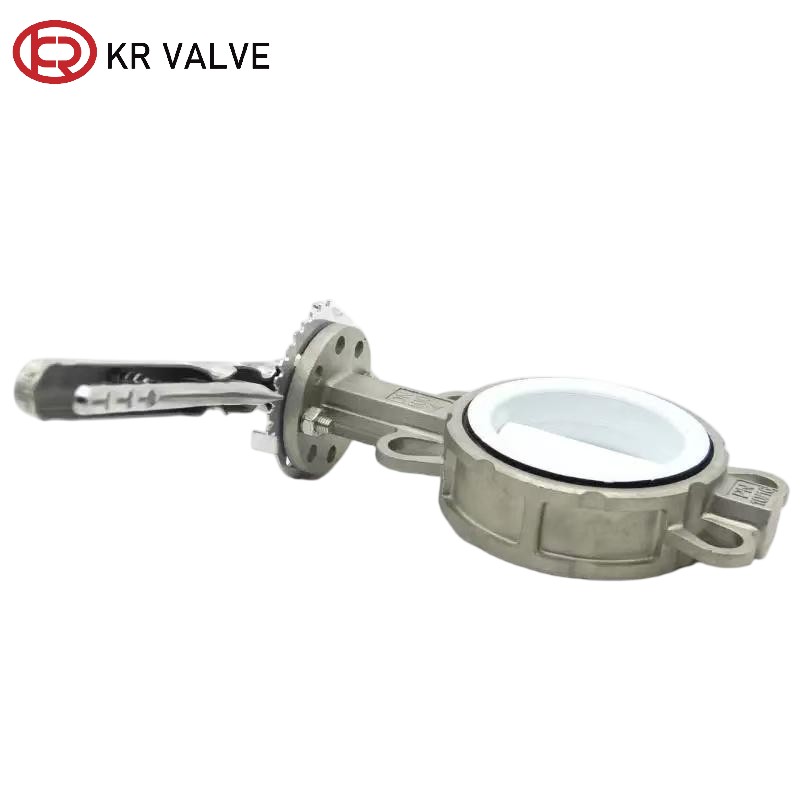
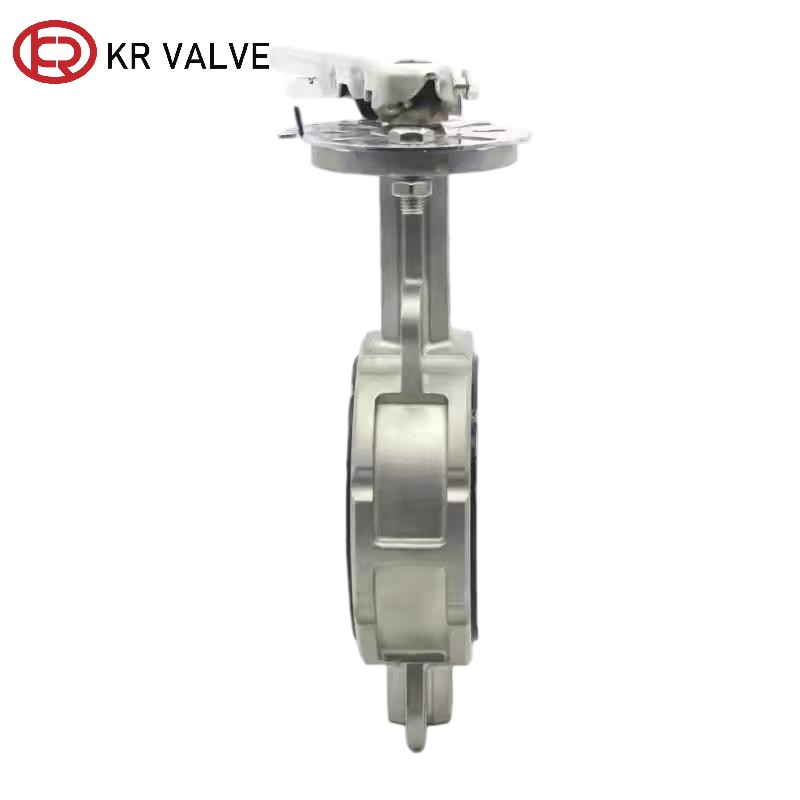
1 / 3
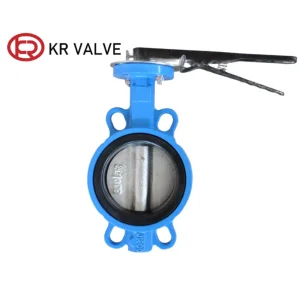
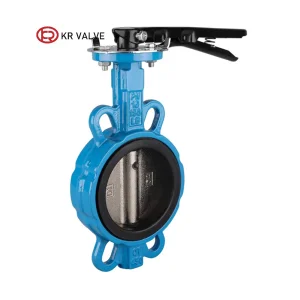
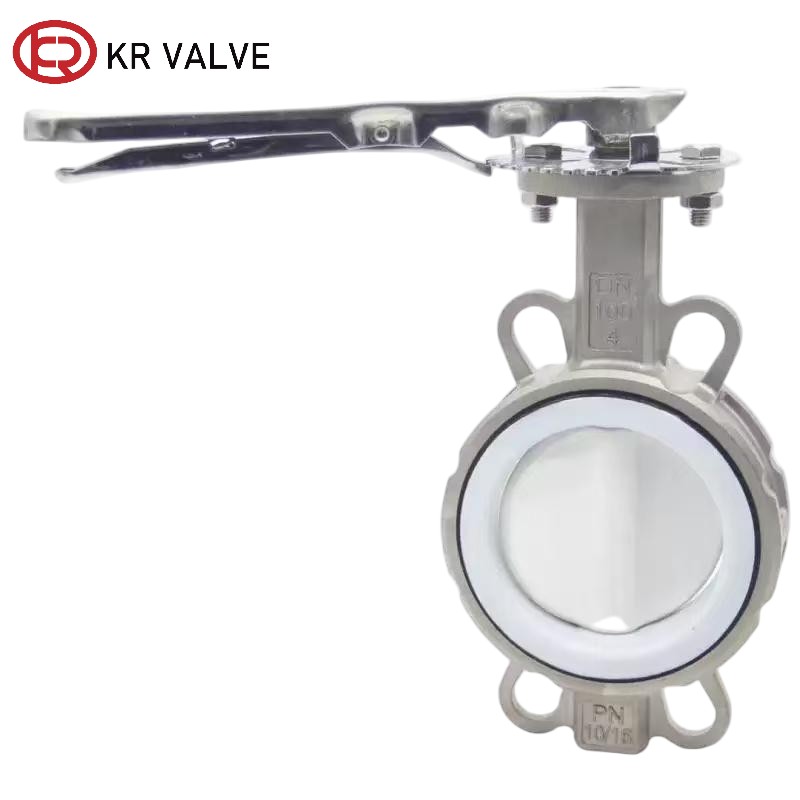
| Valve Type: | Wafer butterfly valve | Structure: | Concentric |
| Standard: | EN593 | Workmanship: | Investment casting |
| Sealing direction: | Bidirectional | Sealing grade: | Zero leakage |
| Temperature: | -20°C < T < 120°C | Operation: | Handle/Lever |
The inner cavity of the valve body and the surface of the butterfly plate are fully covered with polytetrafluoroethylene (PTFE) material, which has extremely strong chemical stability and can withstand most strong corrosive media including concentrated sulfuric acid, hydrochloric acid, and nitric acid. The temperature resistance range can reach -196 ℃ to 200 ℃.
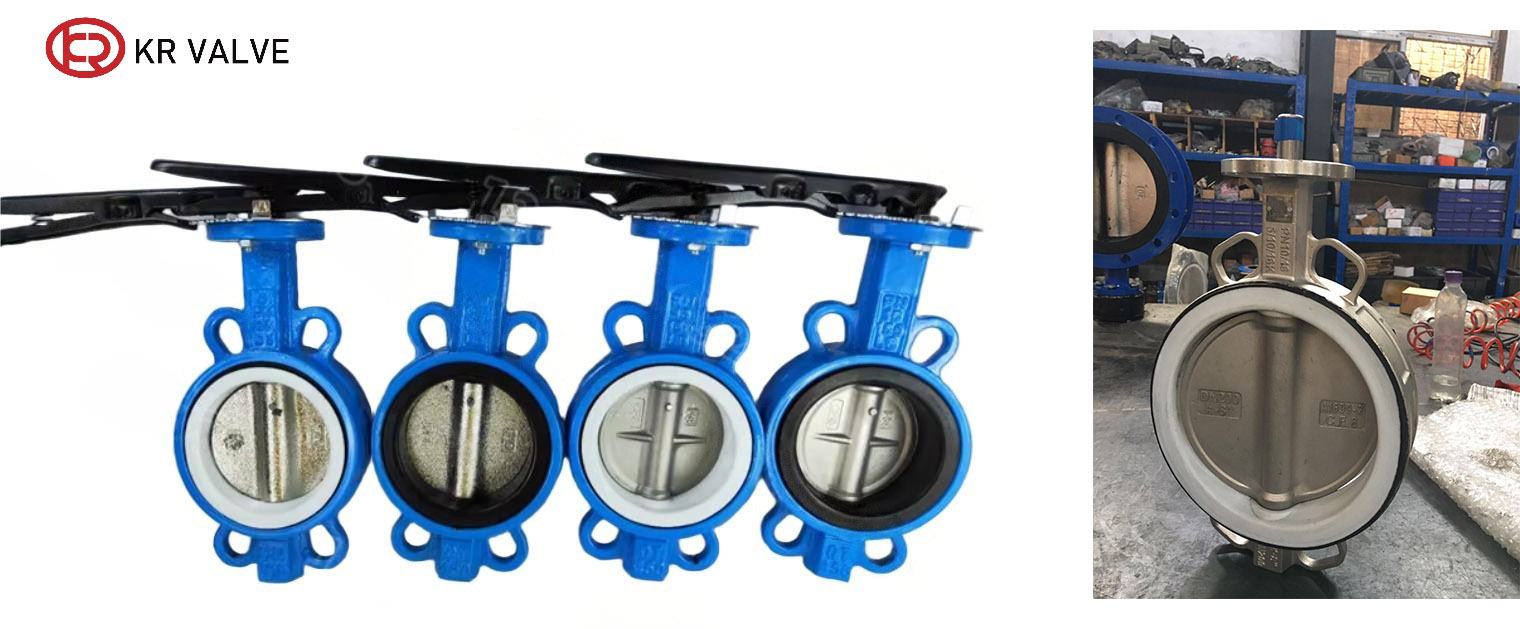
The friction coefficient of PTFE material is extremely low (0.02-0.10), and the valve seat has a self-lubricating effect, greatly reducing the resistance when the butterfly plate rotates. Whether manually operated or equipped with pneumatic/electric actuators, it can achieve rapid opening and closing with lower energy consumption.
PTFE itself has strong chemical inertness, does not adsorb media, does not release impurities, meets FDA, GMP and other standards, and can be used for sterile media transportation in the food and beverage, pharmaceutical industries, as well as high-purity fluid pipelines in the electronic semiconductor industry.
Under normal operating conditions, the temperature resistance range is -196 ℃ to 200 ℃, which can adapt to low-temperature cryogenic media and meet the transportation needs of medium temperature corrosive fluids.
| Body | Disc | Stem | Bushing | Seat | |||||
|---|---|---|---|---|---|---|---|---|---|
| Name | Code | Name | Code | Name | Name | Name | Code | Temp | |
| Cast iron | Z | Plated ductile iron | B1 | Stainless steel | Lubrized bronze | NR | X1 | -20~+85℃ | |
| Ductile iron | Q | Aluminum bronze | B2 | Hypalon | X2 | -23~+121℃ | |||
| Aluminum bronze | T | ZG1Cr18Ni9Ti | B3 | EPDM | X3 | -23~+121℃ | |||
| Stainless steel | P | Titanium steel | B4 | PTFE | F4 | +10~+150℃ | |||
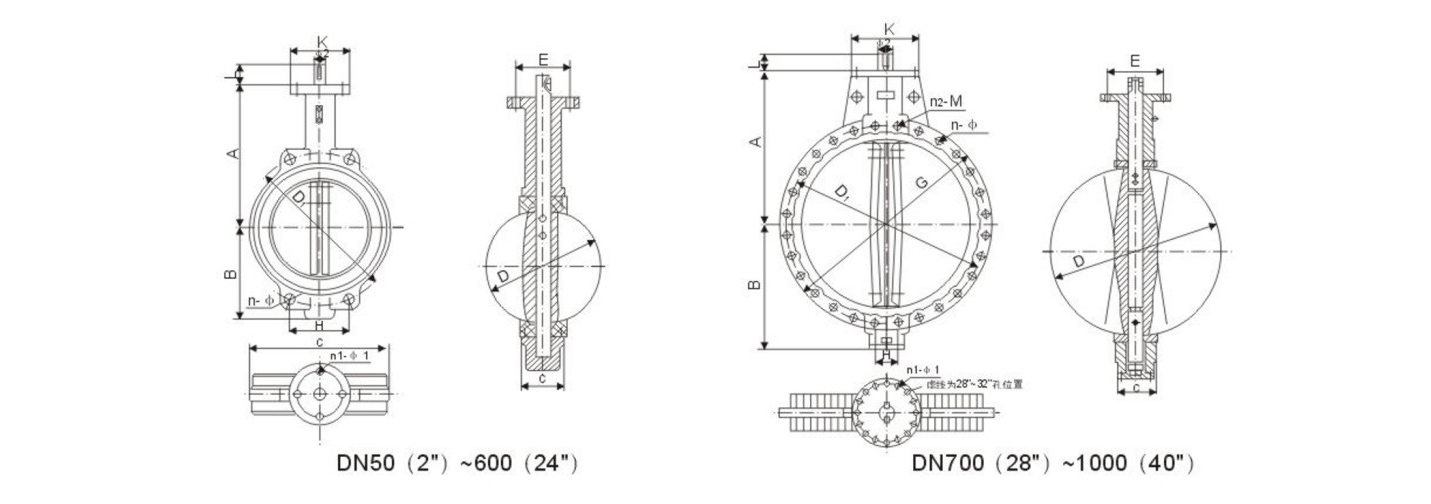
| DN | A | B | C | D | L | H | |
|---|---|---|---|---|---|---|---|
| mm | inch | ||||||
| 50 | 2" | 161 | 80 | 42 | 52.9 | 32 | 84.84 |
| 80 | 3" | 181 | 95 | 45.2 | 78.8 | 32 | 61.23 |
| 100 | 4" | 200 | 114 | 52.1 | 104 | 32 | 70.80 |
| 150 | 6" | 226 | 139 | 55.8 | 155.6 | 32 | 91.08 |
| 200 | 8" | 260 | 175 | 60.6 | 202.5 | 45 | 112.89 |
Widely used in corrosive or high-purity medium conveying systems in various industries such as chemical, pharmaceutical, food and beverage, power, and environmental protection due to the strong corrosion resistance of PTFE lining, compact clamp structure, and zero leakage sealing characteristics.
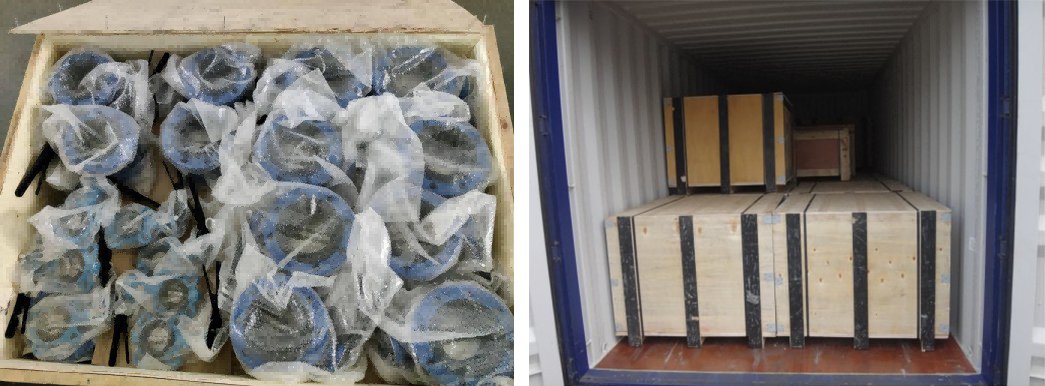
Standard export wooden case packaging to ensure the safety of valves during international transportation.